


Cyclamen care
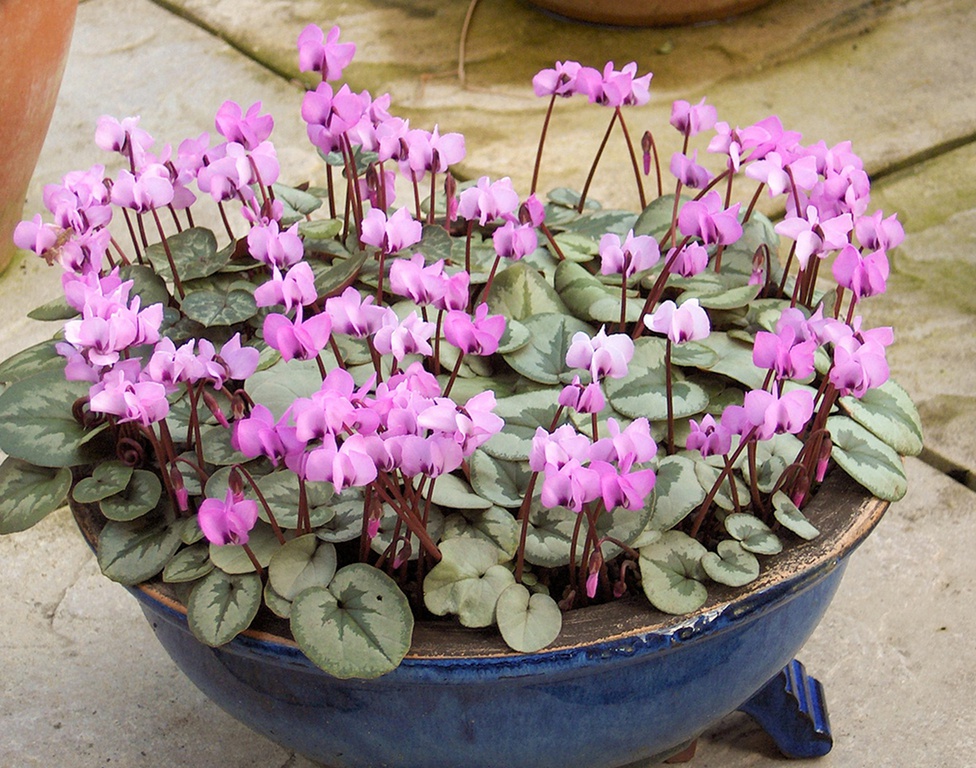
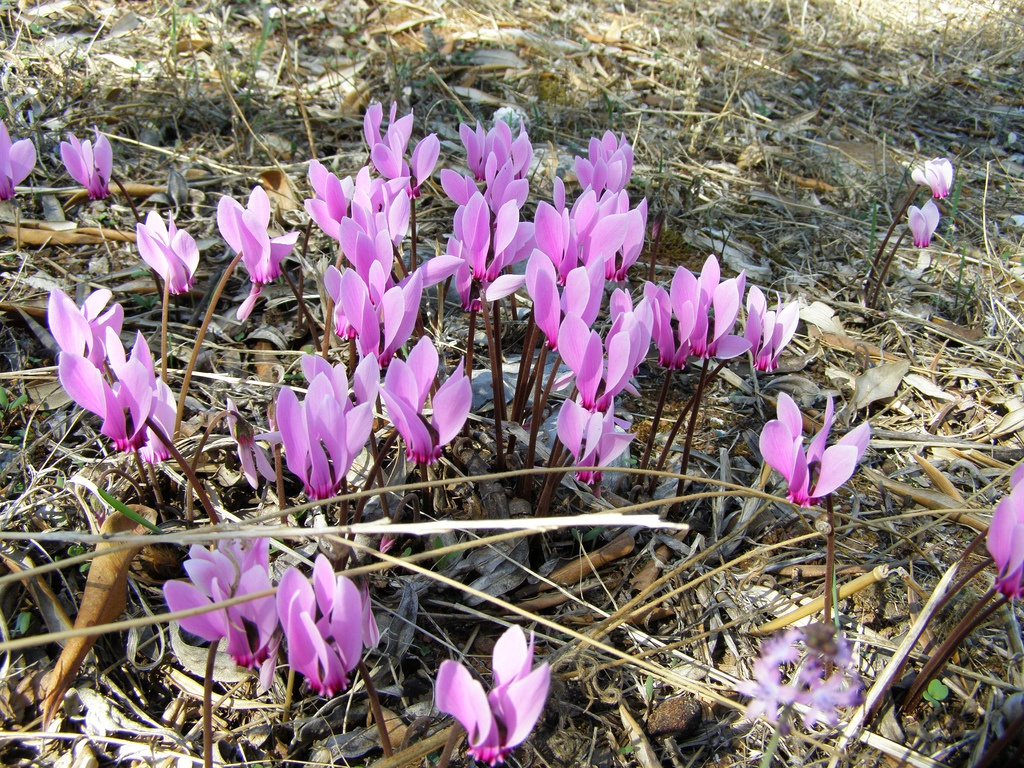
Latin name: Cyclamen persicumCyclamen is a perennial tuberous plant belonging to the primrose family. Its name derives from the ancient Greek word "cyclos" (meaning round). It is mainly found in the Mediterranean regions of Europe, the Middle East, and North Africa. The only species native to Hungary is the woodland cyclamen, which mostly grows in the Alps of Western Hungary. Not only its flowers but also its marbled leaves are decorative. It blooms from November to April.
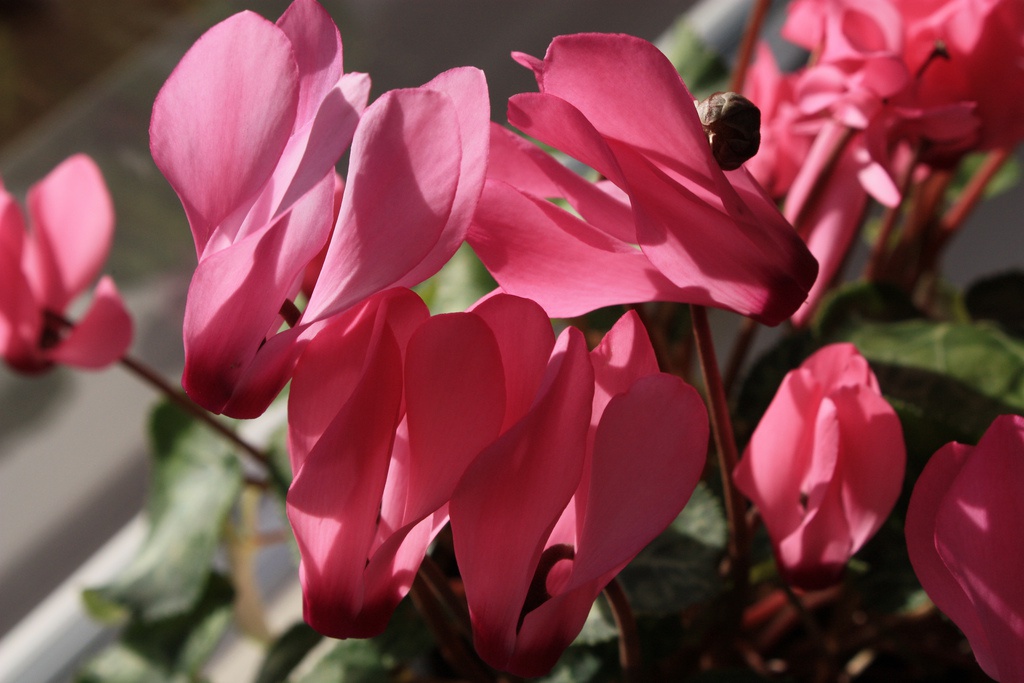
It is available in various colors, most commonly in shades of red or pink, but white or multicolored varieties can also be found. Its leaves may have smooth or ruffled edges.
The most well-known types are the large hybrids, though there are also very small cyclamens, which are just as hardy and bloom just as richly as their larger counterparts. Hybrids have no scent, but the small varieties have a pleasant fragrance. The selection is greatest in the autumn and before Christmas.
Cyclamen Care
Cyclamen care: it prefers a bright location protected from direct sunlight. In warm conditions, its leaves quickly yellow and fall. Keep the soil moist but never waterlogged. It prefers potassium-rich fertilizer, but it's better to apply it more frequently in smaller concentrations.
Light Requirements for Cyclamen
Cyclamen prefers a bright but not sunny place, which is why many people keep it between double window panes. In summer, do not place it in direct sunlight. However, in autumn and winter, it is ideal to keep it on the windowsill.
Keep its pot near a north-facing window, or in any other cool place like an unheated veranda. From mid-May, keep it in a warm but shaded spot.
Temperature Requirements for Cyclamen
A cool environment and good ventilation are very important. Even indoors, the temperature should not exceed 68 °F (20 °C). It does not tolerate warm rooms or central heating well. In warm conditions, its leaves yellow quickly and its flowers fall.
It thrives best in a cool, humid climate, so during its long flowering and growing period, maintain a temperature of 50 - 59 °F (10 - 15 °C), and you can enjoy its flowers even until the end of March. It can tolerate 41 - 50 °F (5 - 10 °C) for shorter periods.
If you want to enjoy it in a heated room, move the plant to a cool place at night and during the times when you’re not at home. Find a shaded north-facing window for it. In a cool place, the plant can live for several years and bloom again every year.
Watering Needs for Cyclamen
The longevity of cyclamen greatly depends on correct watering. It likes moisture, but be careful when watering. Always keep the soil moist, but make sure water does not pool underneath.
If possible, water it with soft water, ideally rainwater. It is a misconception that indoor cyclamen cannot tolerate lime and should not be watered with tap water. Lime itself is not a problem; it is the high salt concentration in the water that causes issues.
Do not soak the plant and do not pour water over the leaves or onto the tuber, as this can cause rot. Only water from below.
The best method is to pour a small amount of water into the saucer every 2-3 days. Do not let the water sit for more than half a day; ideally, pour out any remaining water an hour after watering. Let the soil dry slightly between waterings, but be careful: if the leaves and flowers wilt, it causes shock, which weakens the cyclamen.
After the flowering period, in late spring, the cyclamen enters a dormant state: the flowers wither, and the leaves dry up. When the leaves begin to yellow, gradually reduce watering so that the nutrients in the green parts are stored in the tuber.
In summer, move the plant to a shaded place and water it only once a month to prevent it from drying out completely. At the end of August, repot it and start watering gradually again. Once new shoots appear, resume normal watering.
Fertilizing Cyclamen
It is sensitive not only to salts in the water but also to fertilizers. However, fertilizing is necessary, as it is accustomed to it. It’s advisable to fertilize more frequently in lower concentrations.
Use a fertilizer rich in potassium and containing all essential nutrients suitable for flowering plants, once a week. Mix 1 ml of fertilizer per 1 liter of water.
Planting and Repotting Cyclamen
Repot the cyclamen tuber in August into fresh soil and a slightly larger pot. Make sure the tuber is not fully buried—the top third should remain above the soil. If planted too deep, it will produce short-stemmed flowers.
For repotting, use loose, nutrient-rich, well-draining potting soil. Mix potting soil with perlite or gravel in a 1:1 ratio. You can also loosen the potting soil at home with some sand and enrich it with garden compost.
After repotting, place the pot almost up to its rim in water and allow it to soak. Then move the plant to a cool, bright place, like a windowsill.
It’s worth repotting the cyclamen every late summer because, ideally, it will have “used up” the soil from autumn to spring. Fresh nutrients are needed for continued growth.
Reblooming Cyclamen
It is not always easy to get Cyclamen to bloom again. After the second or third year of repotting, it becomes increasingly difficult. Unfortunately, these hybrid varieties are not designed for long lifespans. So don’t be discouraged if you can’t get it to bloom again—just buy a new plant and start over.
Further Care of Cyclamen
After blooming, Cyclamen can spend the summer outdoors in a cool, partially shaded spot, where it can even be sunk into the ground in its pot.
If yellowed leaves and flowers are to be removed, don’t cut them—gently pull them out from the base, as leftover stems may start to rot.
It can also be used as a cut flower, as it is quite long-lasting in a vase. If you cut the flower stems to 2 - 2.5 inches (4 - 6 cm), they can decorate your home for 3–4 weeks.
What to Look for When Buying Cyclamen
Only bring home a fresh, green, firm-leaved, healthy plant. Make sure there are plenty of buds in addition to the open flowers.
Lift the pot and look beneath the leaves to see how many are hiding on the tuber. Due to the dense foliage, the base of the leaves can easily begin to rot.
If you already notice in the store that there are wilted, slimy-stemmed leaves or flower buds at the bottom of the foliage, don’t buy it!
Propagating Cyclamen
There are two methods of propagating Cyclamen. Success depends partly on the variety and partly on how attentive we are. If you don’t have the patience to wait long for flowers, use tuber division. If you’re more patient, you can try seed propagation.
Propagating Cyclamen by Division
The best time to divide Cyclamen is in autumn. During its dormant period, cut the large tubers in half. This way, you immediately get two plants, which should bloom in the next season.
The cut surface can allow fungal diseases in, and it is also possible that both halves may rot. Dip the cut surfaces in charcoal powder and wait until they are completely dry.
Then plant each half into separate pots, keeping the original orientation. This method tends to produce large, strong plants.
Propagating Cyclamen from Seed
When propagating from seed, use seeds harvested from the seed capsules that form after the flowers fade. Carefully care for the young seedlings. Some fast-growing varieties may flower in one year, but others may take three years or more before blooming.
If you decide to propagate from seed:
- Soak the seeds in warm water for at least 12 hours to soften the seed coat. Then place them into pots filled with compost.
- Sprinkle a thin layer of sand or perlite over the seeds to completely cover them.
- Water gently, then place a layer of black plastic over the pot to block out light. For germination, maintain a temperature of 61 - 70 °F (16 - 21 °C).
- Germination begins in 30–60 days. Don’t throw out the pots too early! Once the seedlings appear, remove the covering and place the pots in a bright location.
- The leaves will develop from a small tuber. Carefully transplant them into individual pots to allow further growth.
Pollinating Cyclamen Flowers
How can you obtain Cyclamen seeds? You can buy them at a store, or perform pollination yourself. The easiest method is using a brush. Place the brush in front of or under a well-developed flower and gently tap the flower to collect pollen.
Applying the pollen is easier, as the stigma extends slightly beyond the anthers. As the flowers fade, the stems curl into a spiral and droop to the ground.
If pollination was successful, you’ll find seeds at the ends of the stems. These seeds may not produce flowers identical in color to the parent plant.
Cyclamen Diseases, Pests and Causes of Decline
For Cyclamen kept at home (not in nurseries), botrytis (gray mold) disease is rare but possible. It can occur under high humidity, low light, and warm temperatures. Symptoms include softening and wilting of young leaves and flower buds on the tuber, and the appearance of gray mold on the surface.
Eventually, these parts dry up, and few new leaves or flowers develop. Treatment with plant protection agents is possible but prevention is better. Keep the plant in a lower-humidity environment, ventilate when needed, and provide enough light and a cool temperature.
In warm conditions, leaves yellow and flowers fall off. Keep the plant in a cool room.
Brown spots and leaf discoloration are caused by strong light and dry air. Mist the plant and place it in diffused light.
It can also be affected by mites, thrips, and aphids. Use plant protection products like Vertimec 1.8 EC, Mospilan 20 SP, or Actara 25 WG. For mites, use Vertimec; for thrips, use any of the three; and for aphids, use the latter two.
Is Cyclamen Toxic?
Yes, the tuber of Cyclamen is toxic. Be careful that dogs or cats don’t dig it up and chew on it. Ingesting one or two tubers may cause diarrhea, vomiting, and general malaise.
If a dog or child eats more than two tubers, symptoms may include dizziness, convulsions, breathing difficulties, or even temporary paralysis.
Like the Facebook page!
Please support us! It's just a click
for you, but it means a lot to us.